Flying High: A Rainbow Veteran's Late-Life Adventure
Flying High: A Rainbow Veteran’s Late-Life Adventure
By Kenyon Kemnitz
Inside a room at Lake Mills Health Services, a hand-drawn welcome banner hangs across the doorway, covered in bright colors and child-sized signatures. It is a vibrant contrast to the low-key, slow-paced routine of a nursing home. But the artwork is nothing compared to the whirlwind 18-hour adventure this past April that earned such a celebration. At nearly 98 years old, Korean War veteran Al Weber was perfectly content to let history march on without him.
Quiet and deeply reserved, Al repeatedly shot down the idea of traveling to see the national monuments in Washington, D.C. When the topic of the Badger Honor Flight came up, Al would gently but firmly brush it off. He was nervous about his physical limitations, worried about navigating a crowded city, and content staying within his familiar routine.
From Al’s perspective, his military service was simply a duty he had answered decades ago—not something that required a grand tribute or public fanfare. He dedicated six years of service to his country, including two years of active duty in the Army—stationed in Korea from 1952 to 1954—followed by four years in the reserves. Before he deployed, his family made a simple, somber request.
“My dad and uncle told me, ‘You better come back,’” Al recalled, the memory still bringing tears to his face years later. "On those hard days, when I wasn’t sure we’d make it, I remembered those words. I said, ‘I’d come back,’ and by God, I brought every part of me home.”
Al kept his promise, returning to Wisconsin two years later. He viewed himself not as a hero, but as a modest guy who had returned to his roots.
“When I first met Al, he didn’t like talking about his military experience,” said Nicole Sommerfeldt, his hospice social worker at Rainbow Community Care. “When I brought up the flight each time, he said, ‘I am not worth all that fuss.’ I told him he was beyond worth it.”
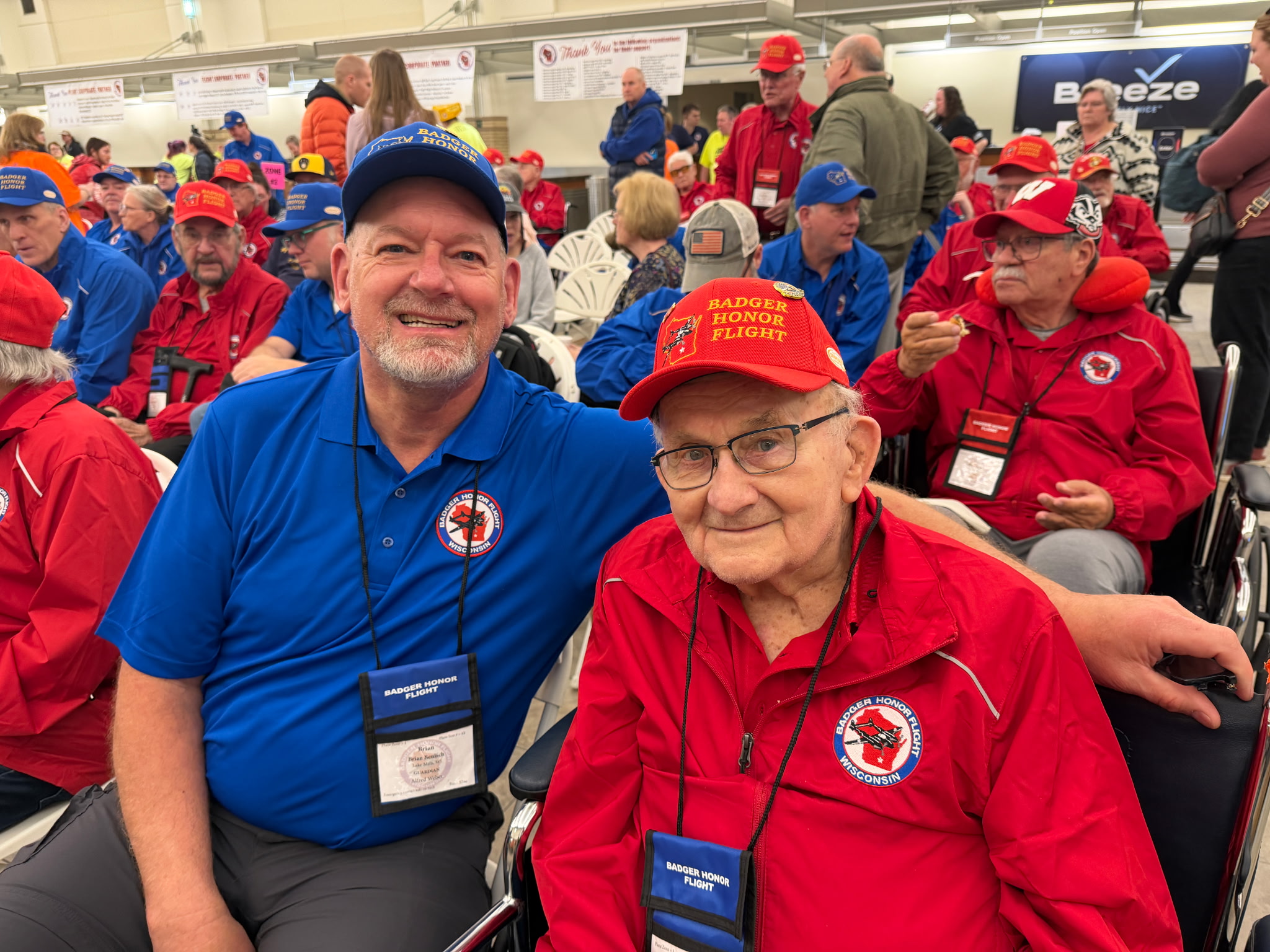
Shattering that shell didn’t require an army, only a dedicated care team, a little loving persistence, and a kindred spirit named Brian Benisch. A fellow veteran who served seven years in the Air Force and flew relief helicopters during the Gulf War, Brian had been visiting Al weekly through Rainbow’s veteran volunteer program. Soon, they formed an effortless bond. They shared military stories, and cracked jokes that only those who have worn the uniform could truly appreciate.
“His body is 98, but Al could easily be 50,” Brian said. “His mind is 100% and he’s not a grumpy old man. He’s just a wonderful soul.”
When Nicole noticed their natural connection, she hatched a plan with Rainbow nurse manager, Amanda Raduege. Beyond offering encouragement, Brian volunteered to serve as Al’s guardian for the grueling 18-hour marathon. Putting his trust in a friend who had become a lifeline, Al finally took a massive leap of faith and said yes.
What followed wasn’t just a fast-paced, cross-country itinerary on Badger Honor Flight Mission 64. It was a profound transformation that completely flipped the script on what it means to enter hospice care, proving that life’s final chapter can be defined by vibrant adventure rather than passive retreat. But synchronizing that journey required a village.
Behind the scenes, the Rainbow staff balanced rigorous clinical planning with deep emotional support. Amanda served as the clinical anchor for the mission. Initially, there were discussions about postponing Al’s flight until May, but Amanda advocated for keeping the timeline the same. "Let's be better safe than sorry," she insisted, noting that utilizing his current window of physical strength was essential. She coordinated with the Honor Flight's specialized medical team and ensured that every potential health variable was addressed long before takeoff.
Meanwhile, Nicole helped ease the family’s anxieties about such a major trip by highlighting the authentic friendship between Al and Brian. Knowing their loved one was in the care of a fellow veteran and backed by Rainbow gave them the confidence to greenlight the trip.
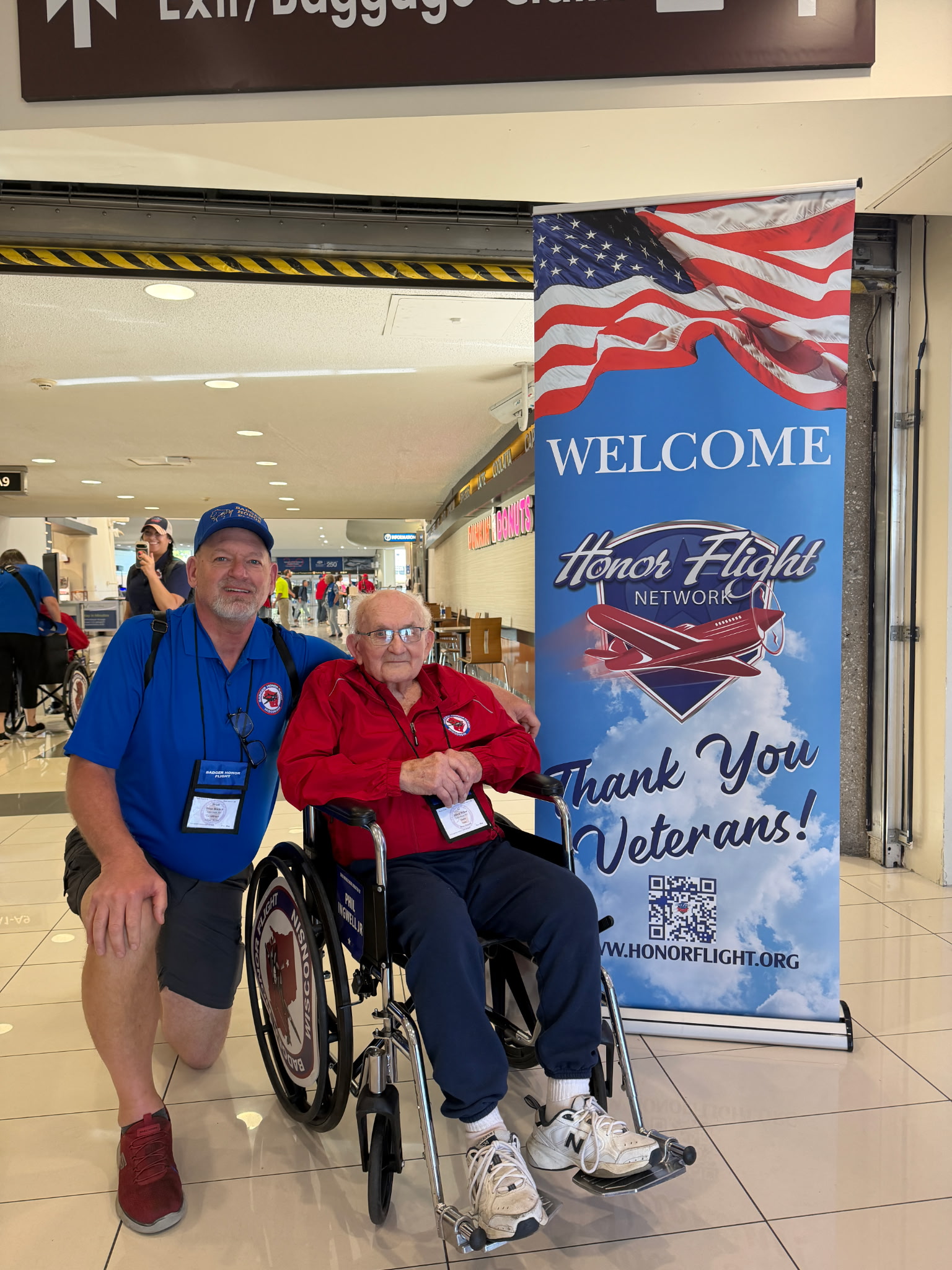
On the morning of the flight, Brian arrived at 3:30 AM, expecting to find Al slowly waking up. Instead, Al was already dressed, sitting in his wheelchair, and buzzing with anticipation. At a time when most of the world was still asleep, the duo set off into the dark Wisconsin morning. Amidst the rush, Al requested a simple breakfast: a cold carton of milk for a momentous day ahead.
From the moment they reached the Dane County Regional Airport in Madison, the day was anything but ordinary. They were met with the sights and sounds of a hero's departure: fire trucks flanking the roadway with a massive American flag suspended in the air, a roaring American Legion color guard, and crowds cheering before the sun had even risen.
Al had spent weeks worrying about his stamina, but the kinetic energy of the environment acted as his medicine.
"He got more energetic as the day went on," Brian recalled. “He just got better and looked happier and younger as the day unfolded."
“I kept going because I knew I had to,” Al said. “The kids and everyone else shaking my hands gave me a burst of energy.”
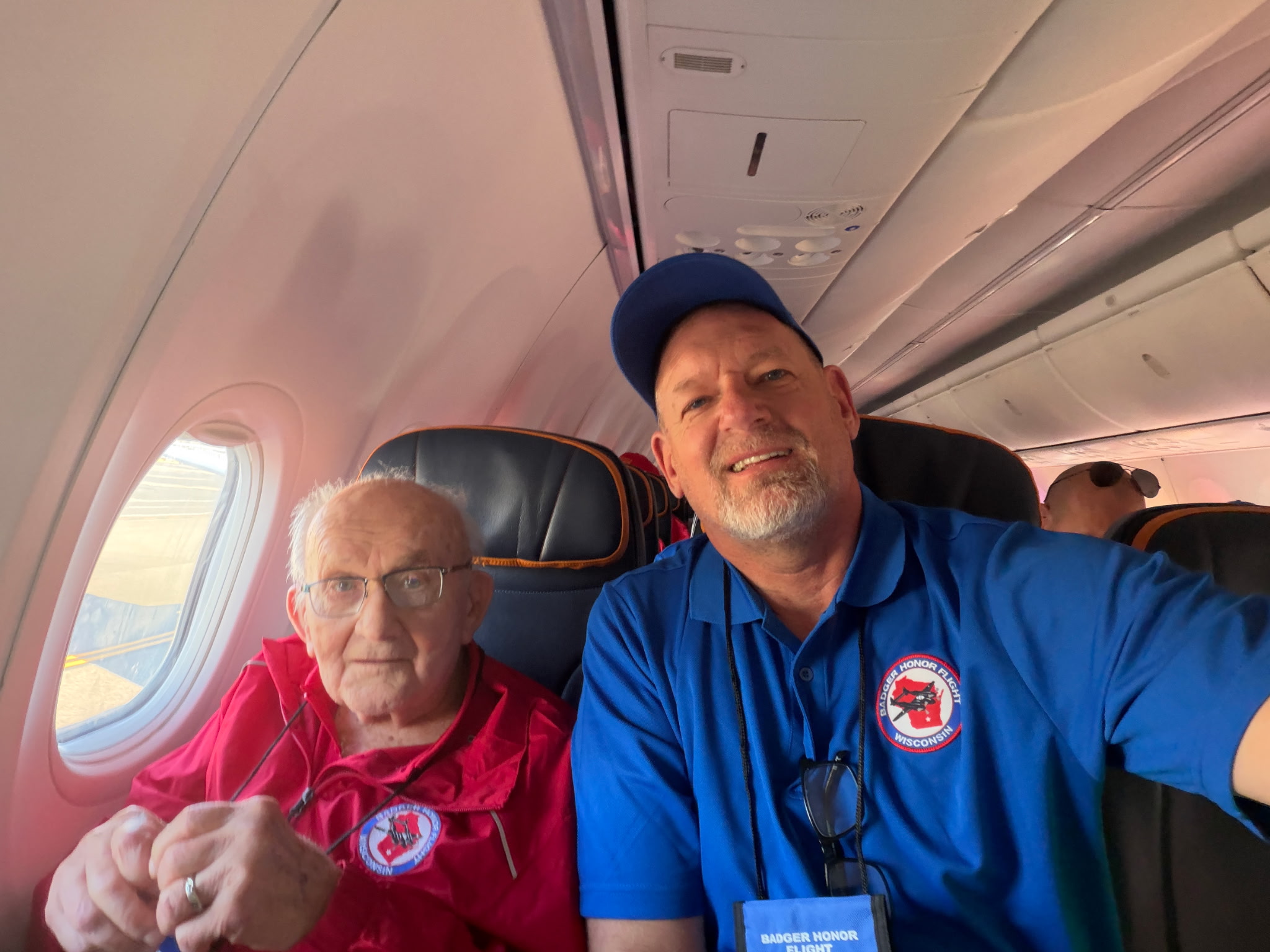
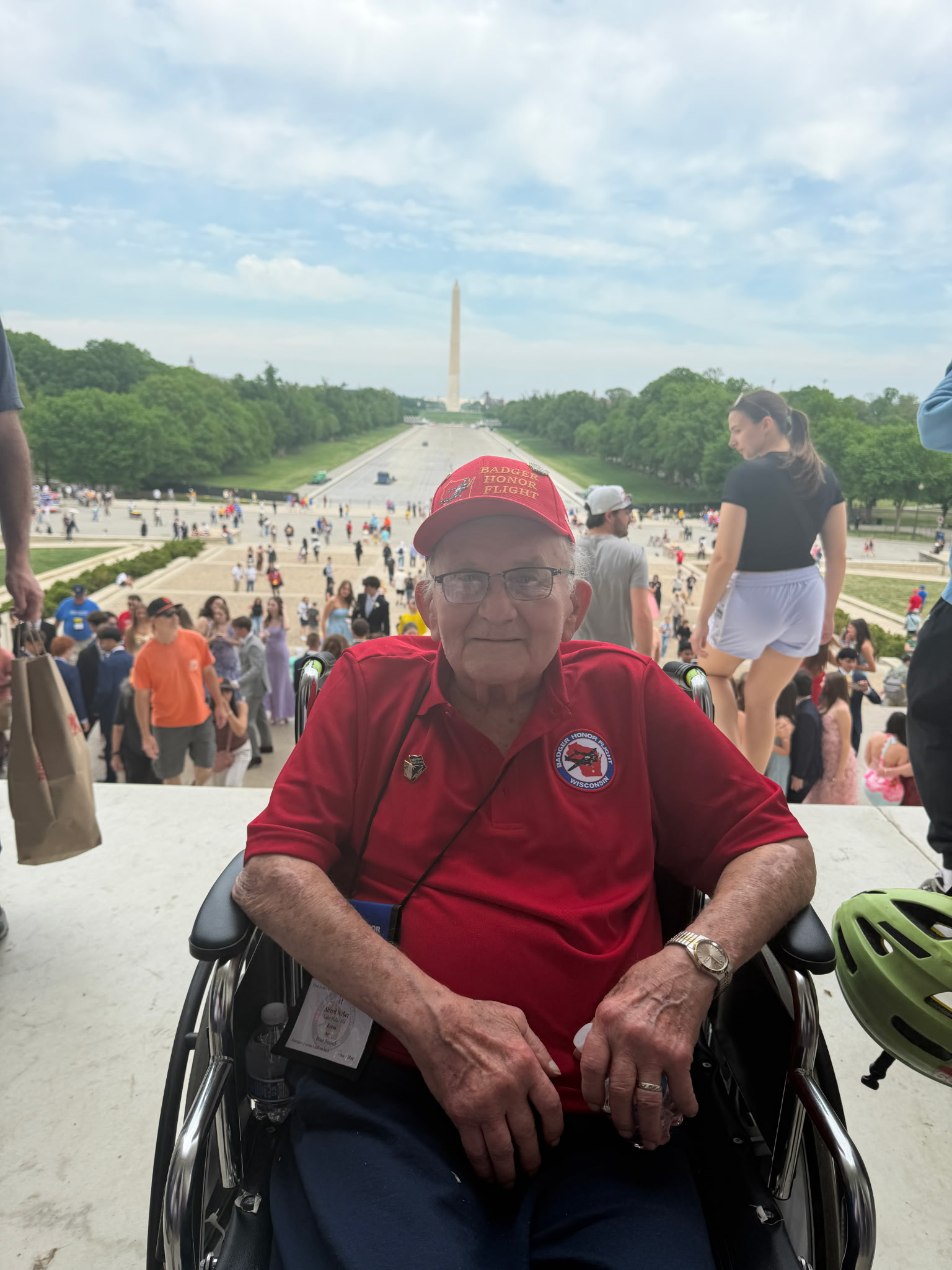
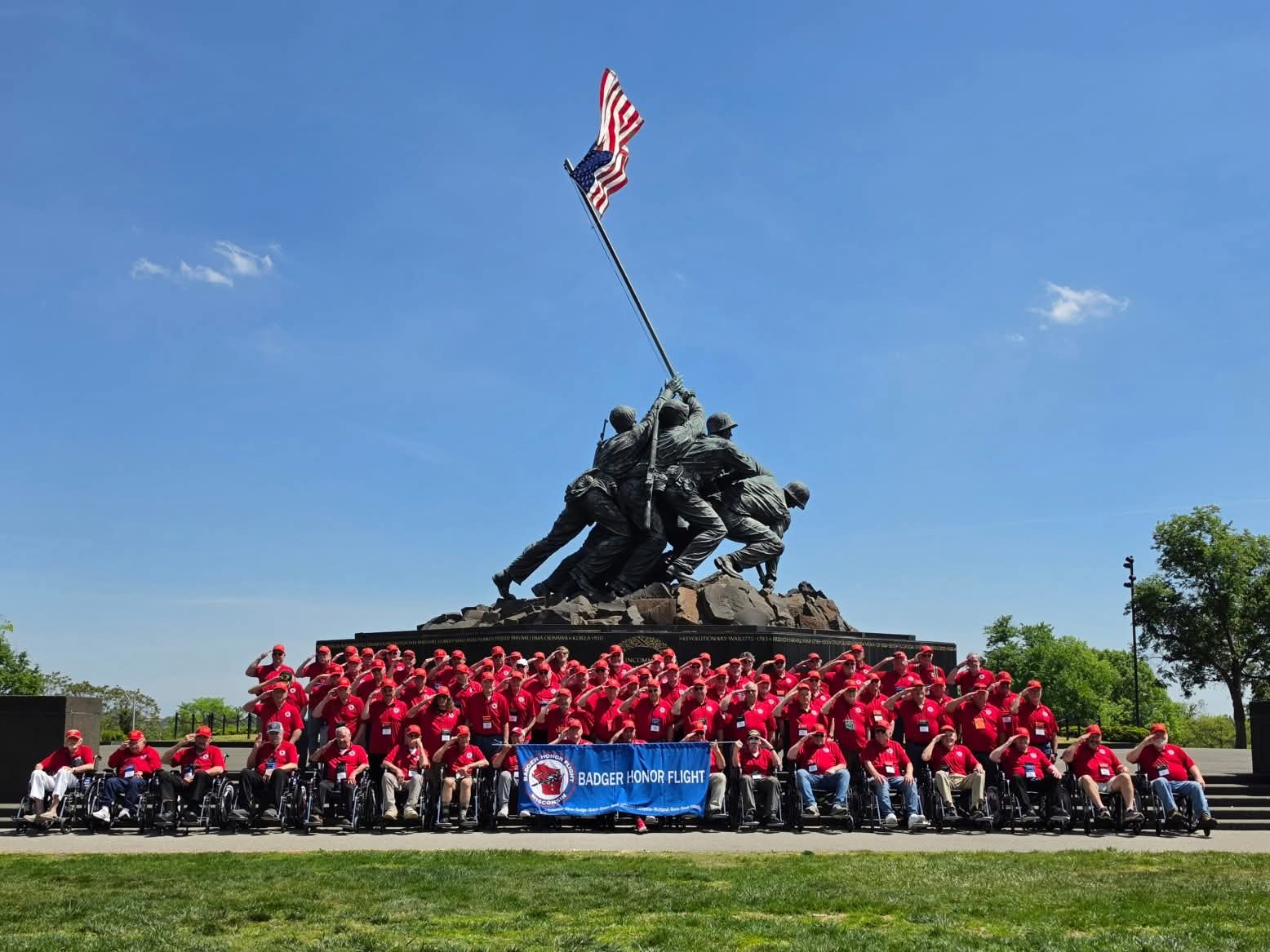
The Honor Flight was packed with over 80 veterans, but Al was the patriarch of the group. As the most senior veteran on board and one of only three Korean War veterans, he was a living link to an era of conflict that most Americans only know about from history books. Throughout the day, Al was accompanied by his own personal medic, an EMT named Travis, who remained glued to his side, providing a continuous blanket of clinical safety and companionship.
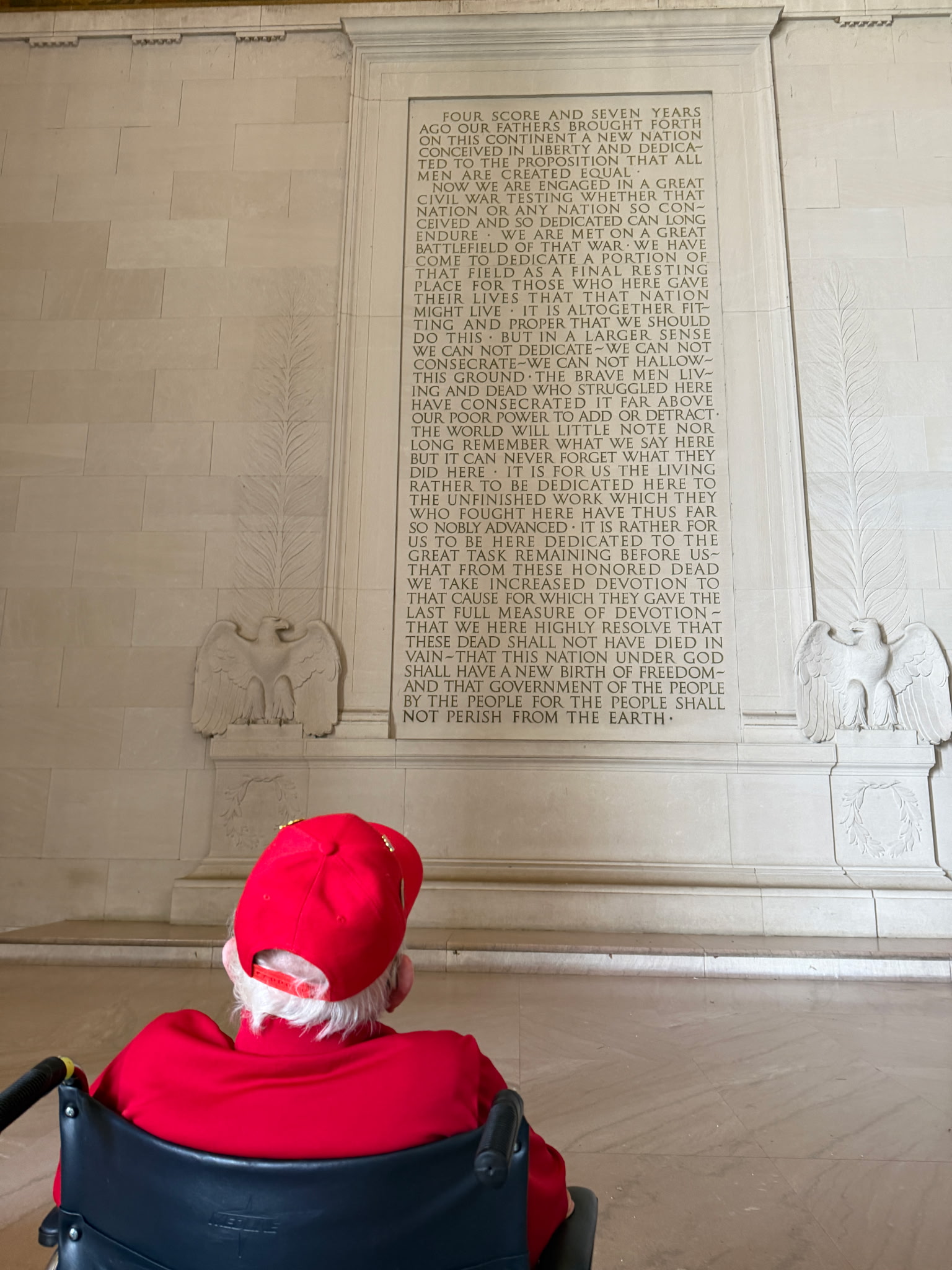
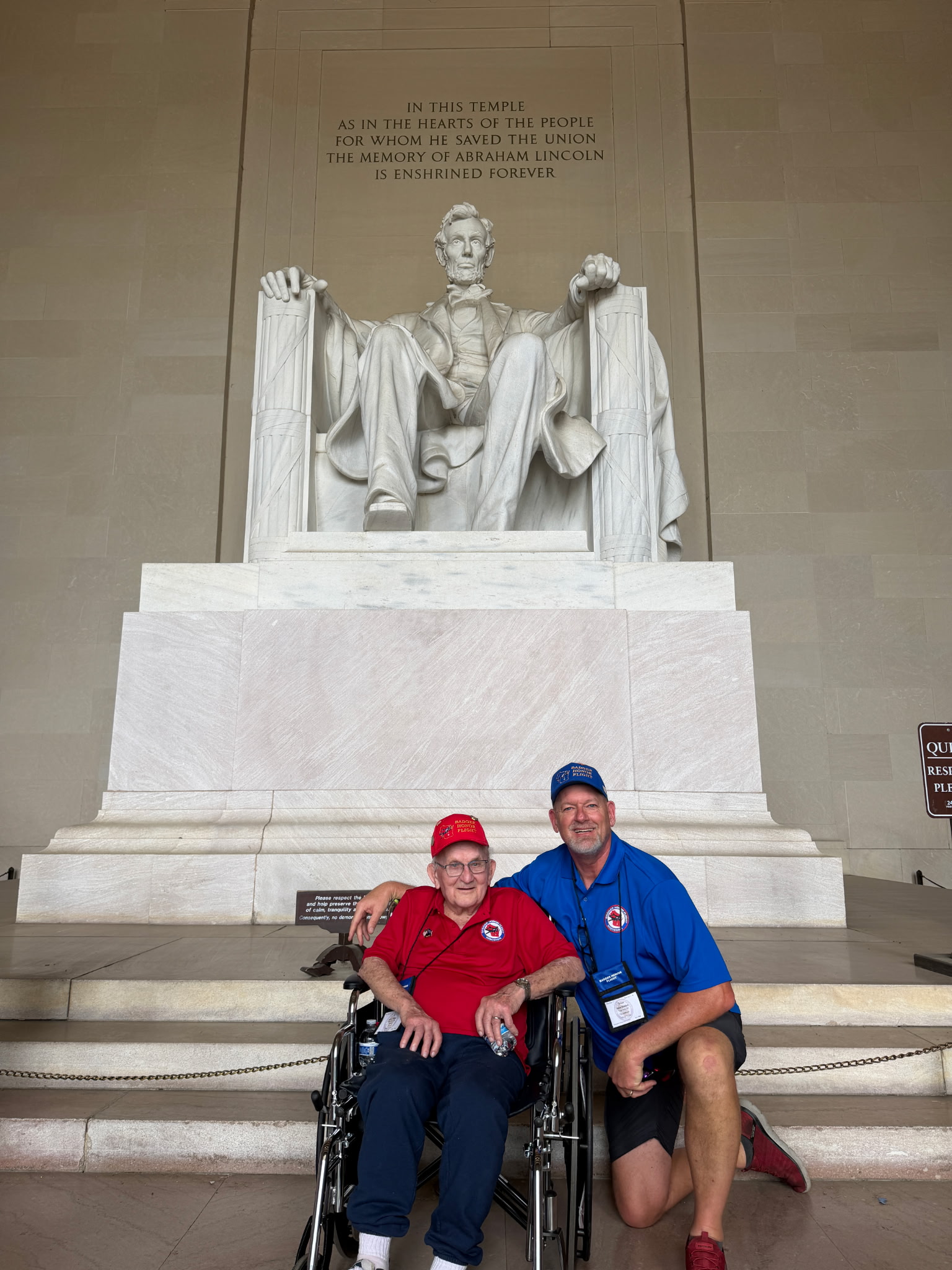
Al and Brian’s itinerary was packed with monuments, each evoking a different layer of history and reflection. At the towering Lincoln Memorial, instead of giving it a quick glance, Al sat silently, carefully reading every single word of the Gettysburg Address carved into the stone walls. At the expansive Franklin D. Roosevelt Memorial, he paused at every turn, reading the speeches of the president who had guided the nation during his own youth.
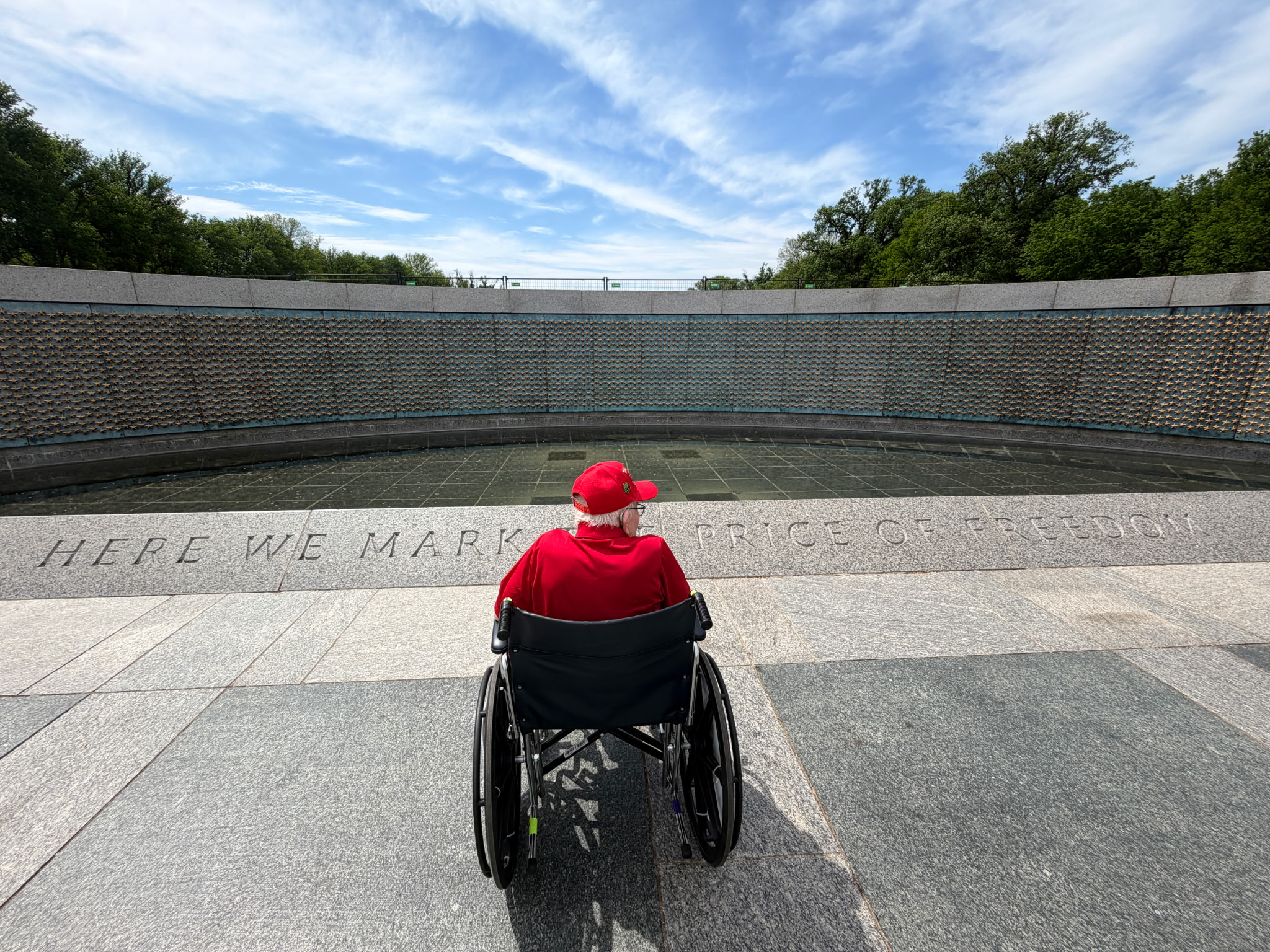
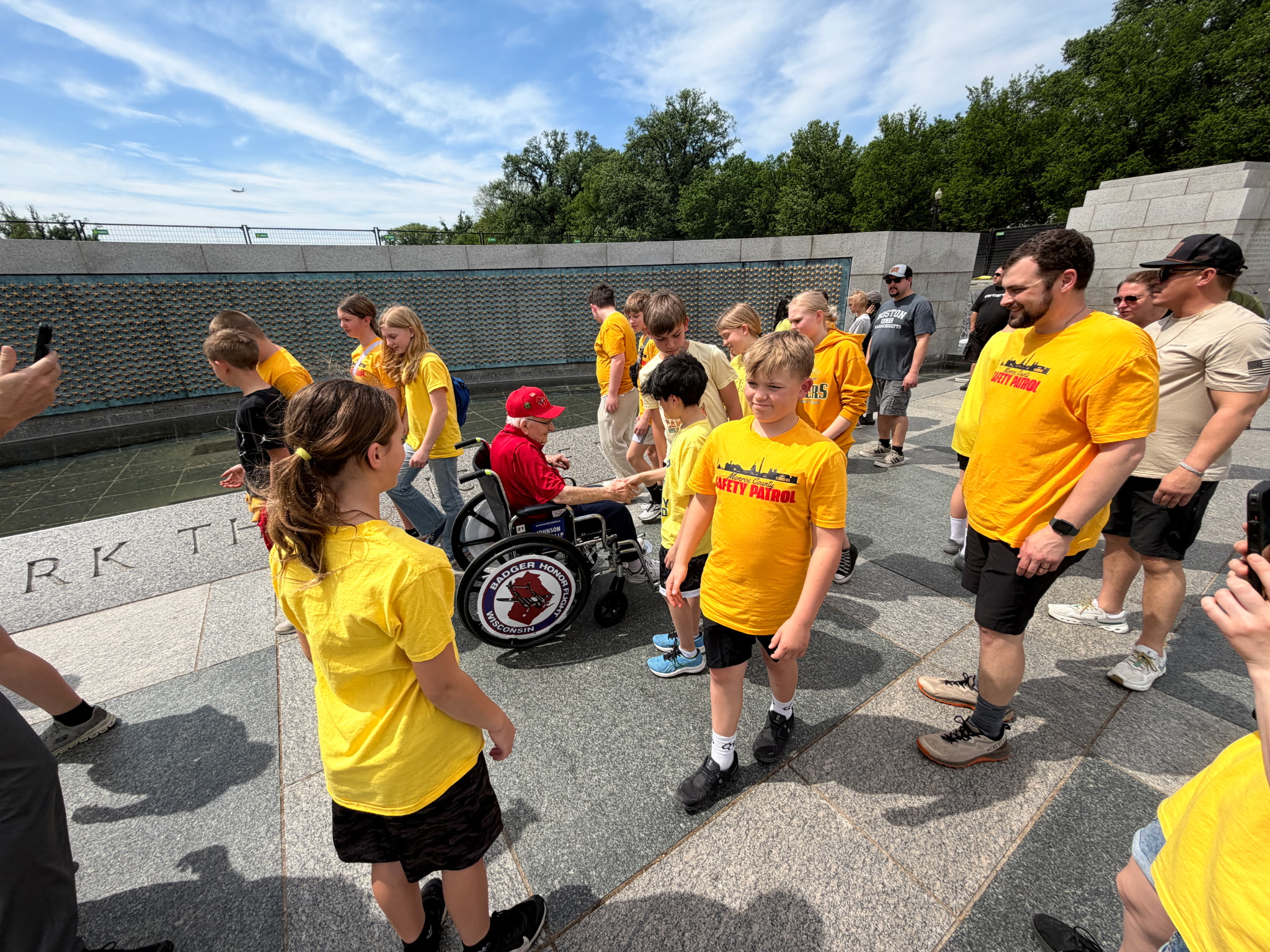
But it wasn't just the stone and bronze that moved them, it was the people. At the World War II Memorial, a large group of middle school students from Monroe, Wisconsin, swarmed Al's wheelchair, lining up by the dozens to shake his hand and thank him for his service.
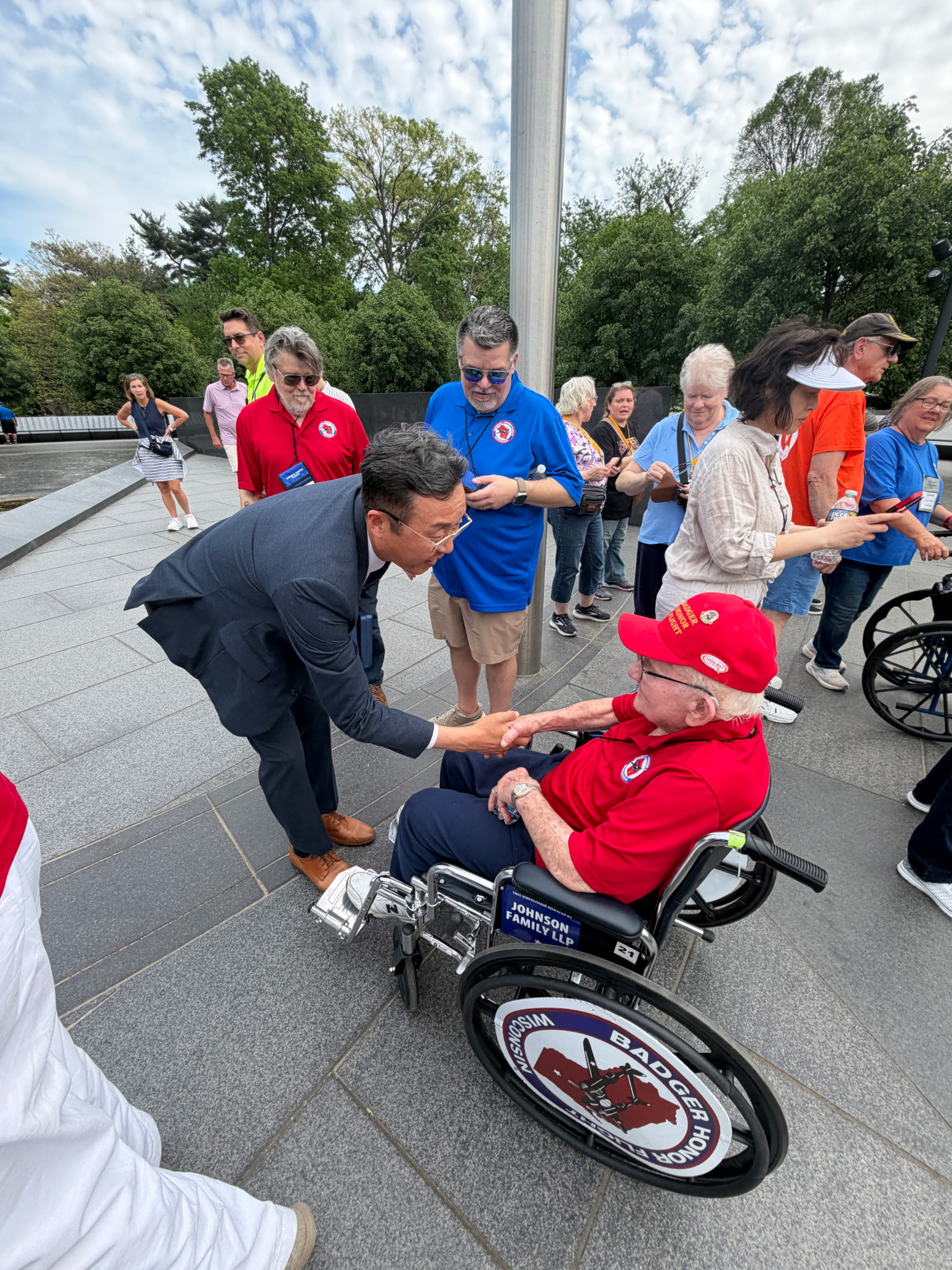
An unexpected emotional centerpiece of the entire mission awaited them at the Korean War Memorial. They were greeted by the South Korean Ambassador to the United States. Whenever he is informed a Korean War veteran is visiting, he makes it a personal policy to travel to the memorial to deliver the gratitude of his nation face-to-face.
The ambassador knelt beside Al’s wheelchair, gripped his hand, and thanked him on behalf of his country and the millions of citizens whose freedom was secured by American service lines. He then presented a sample Medal of Honor, starting the process to get Al’s formal discharge papers updated so he could receive the award at home.
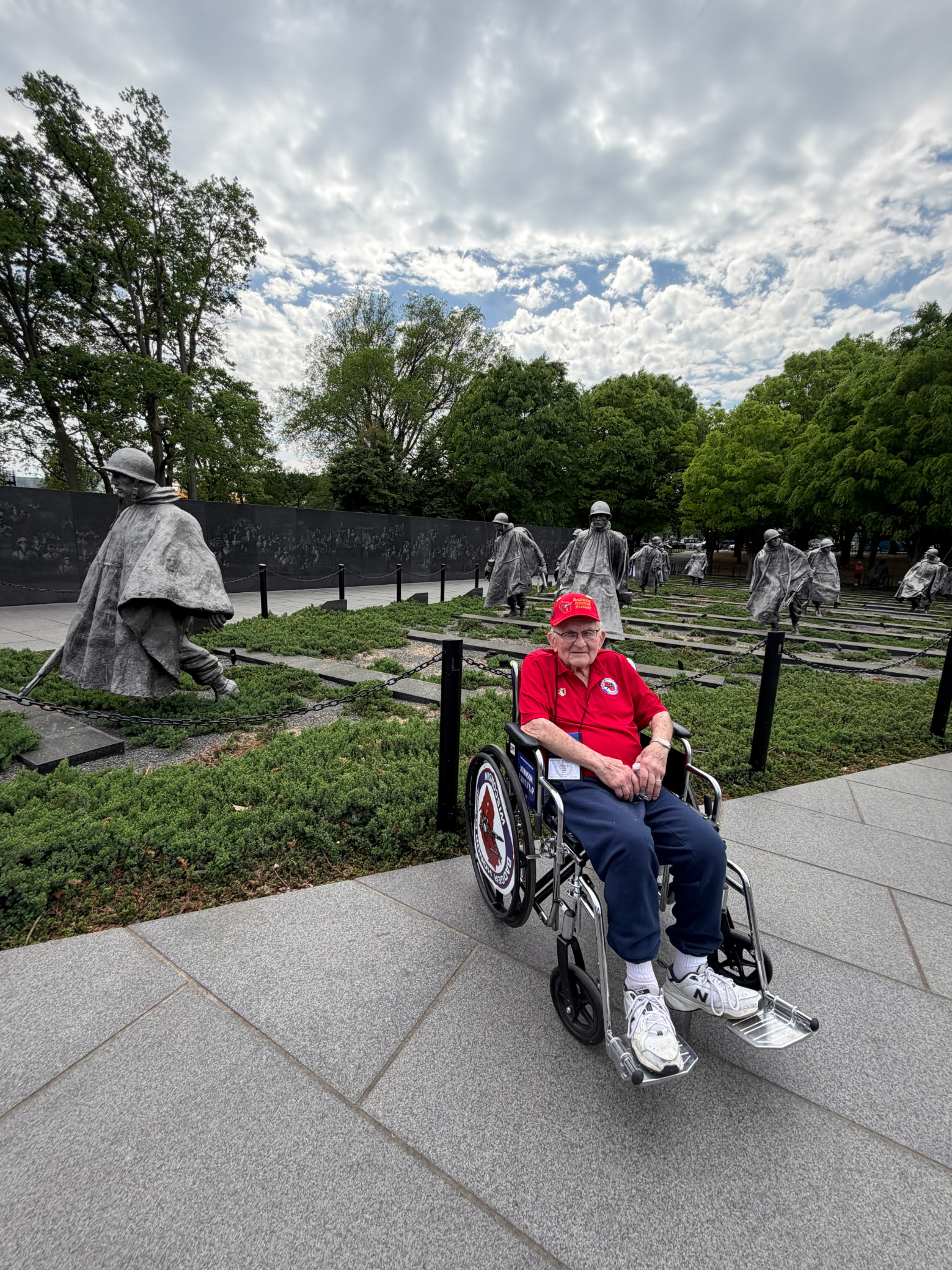
Moments later, a touring group of 50 South Korean nationals spotted Al. Recognizing him as a liberator of their homeland, they surrounded him, bowing in deep respect, taking turns shaking his hand, and posing for photos. Al even found himself as the center of attention for young men and women on their way to prom, who paused to take a treasured photo with the veteran.
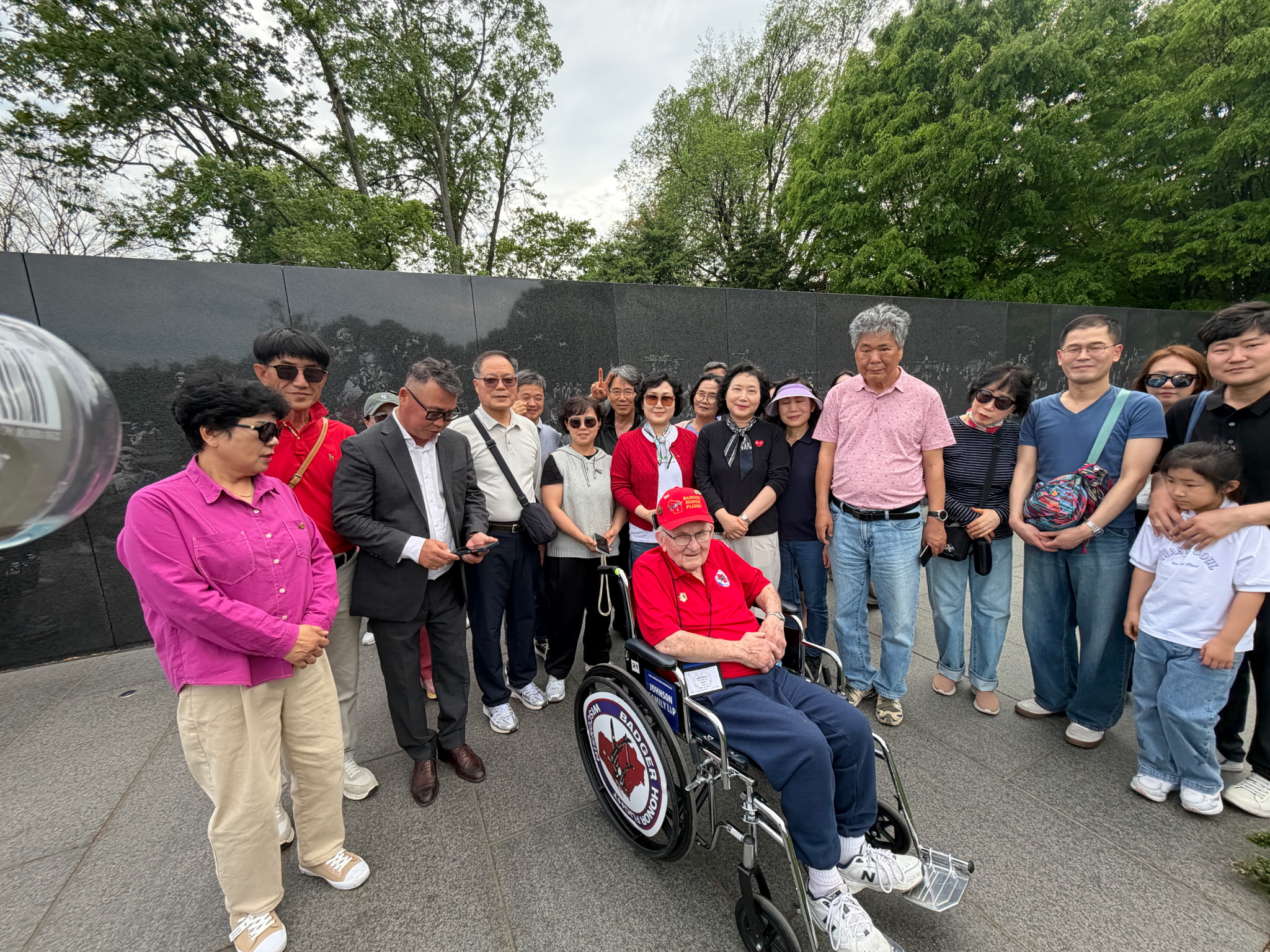
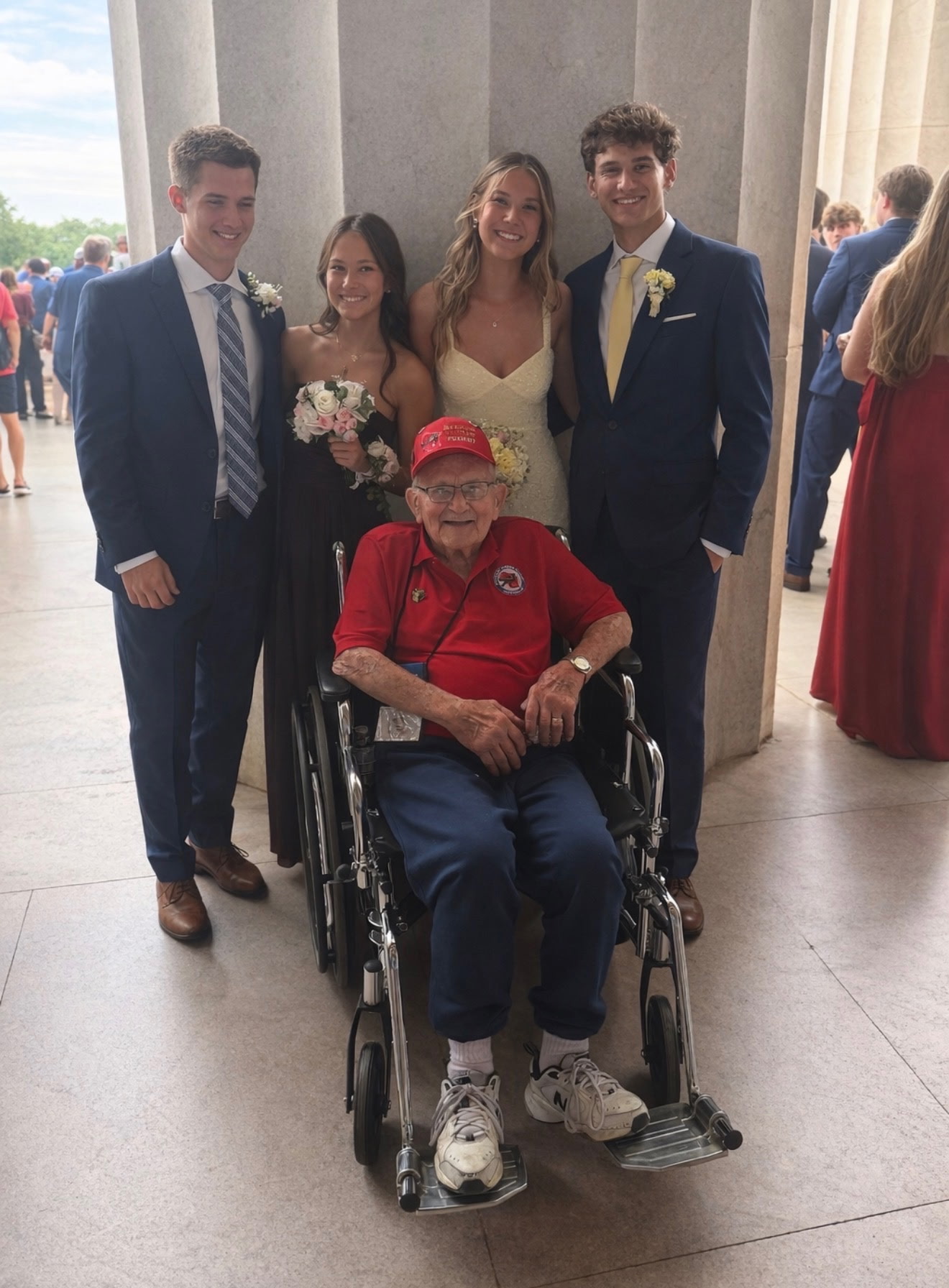
For a man who had spent nearly a lifetime minimizing his service—as merely keeping communication lines running under dangerous “hairy” conditions—the overwhelming outpouring of international gratitude was staggering.
"I thought I looked kind of goofy," Al said softly. "You wouldn’t think people would care that much about it after all this time. I’m just a little old farmer."
"You didn't look goofy, Al—you looked proud,” Brian said. “Think about what you did for all those people. That was the honor you deserved all along."
With tears in his eyes, Al looked up at his volunteer and said, "I would have never got it if it wasn't for you."
“You're the one that let me take you,” Brian replied.
The emotional highs of Washington, D.C. were merely a prelude to what awaited them back in Wisconsin. The flight home featured the traditional Honor Flight 'mail call.' Rainbow staff had spent weeks gathering a collection of personal cards and letters, finally surprising him with a massive stack of heartfelt messages.
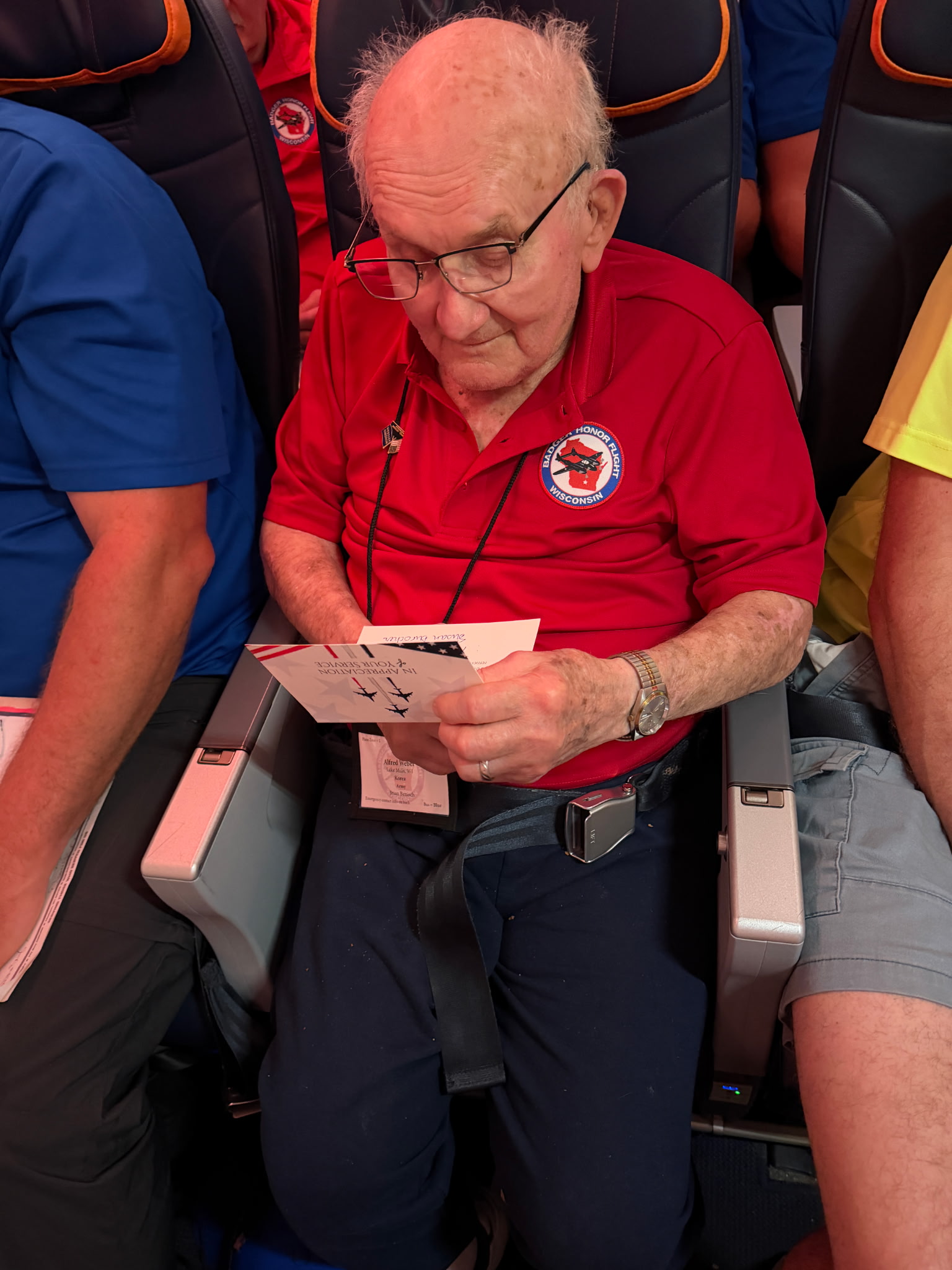
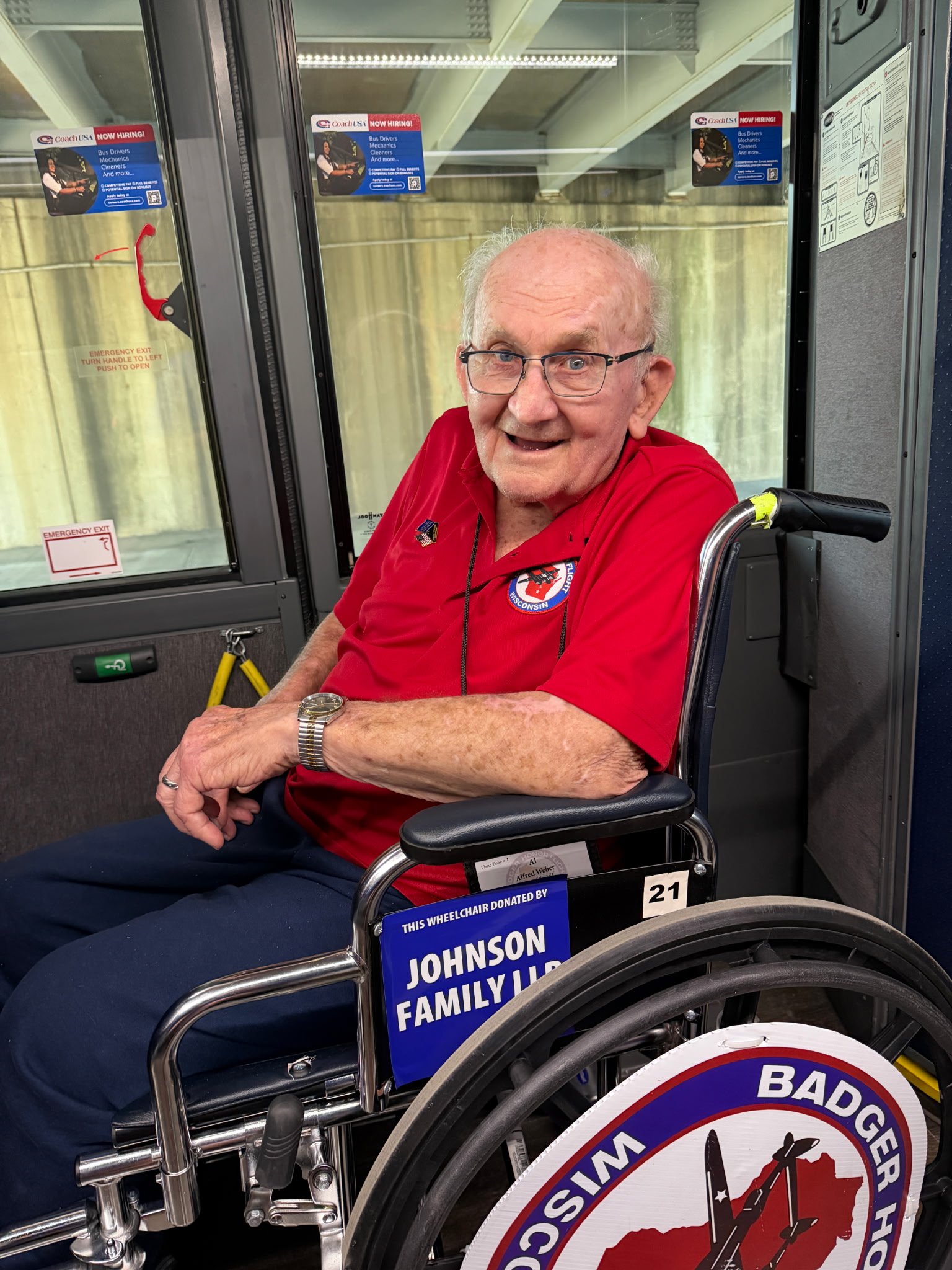
When the plane touched back down in Madison around 9:30 PM, Al was among the first veterans off the aircraft, giving him an unobstructed view of the spectacular scene.
The entire terminal had transformed into a wall of ecstatic sound. A massive crowd stood six to eight people deep on both sides of the hallway. A live band played, cheerleaders held signs announcing the plane's arrival, and the air was thick with flying confetti and American flags.
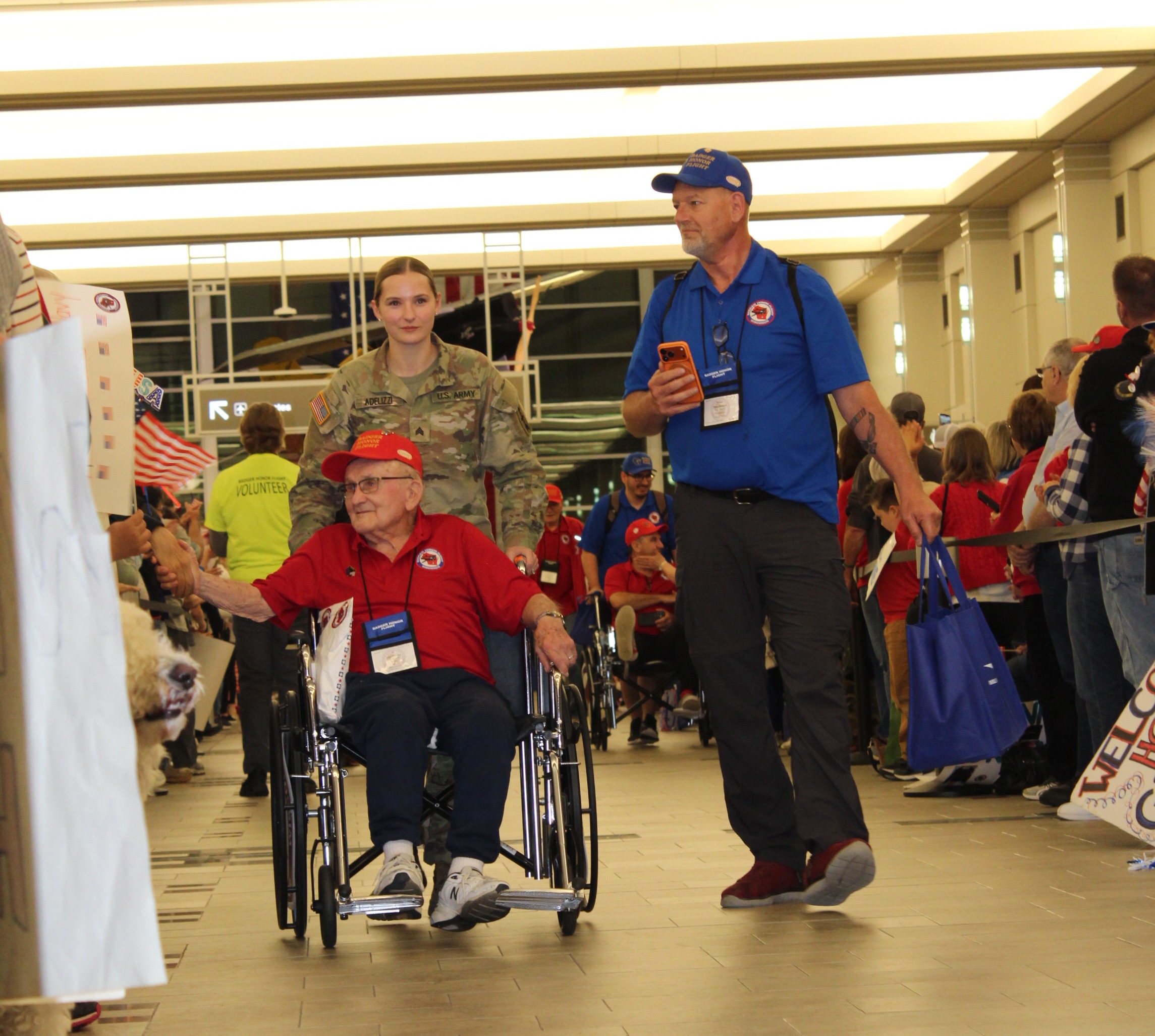
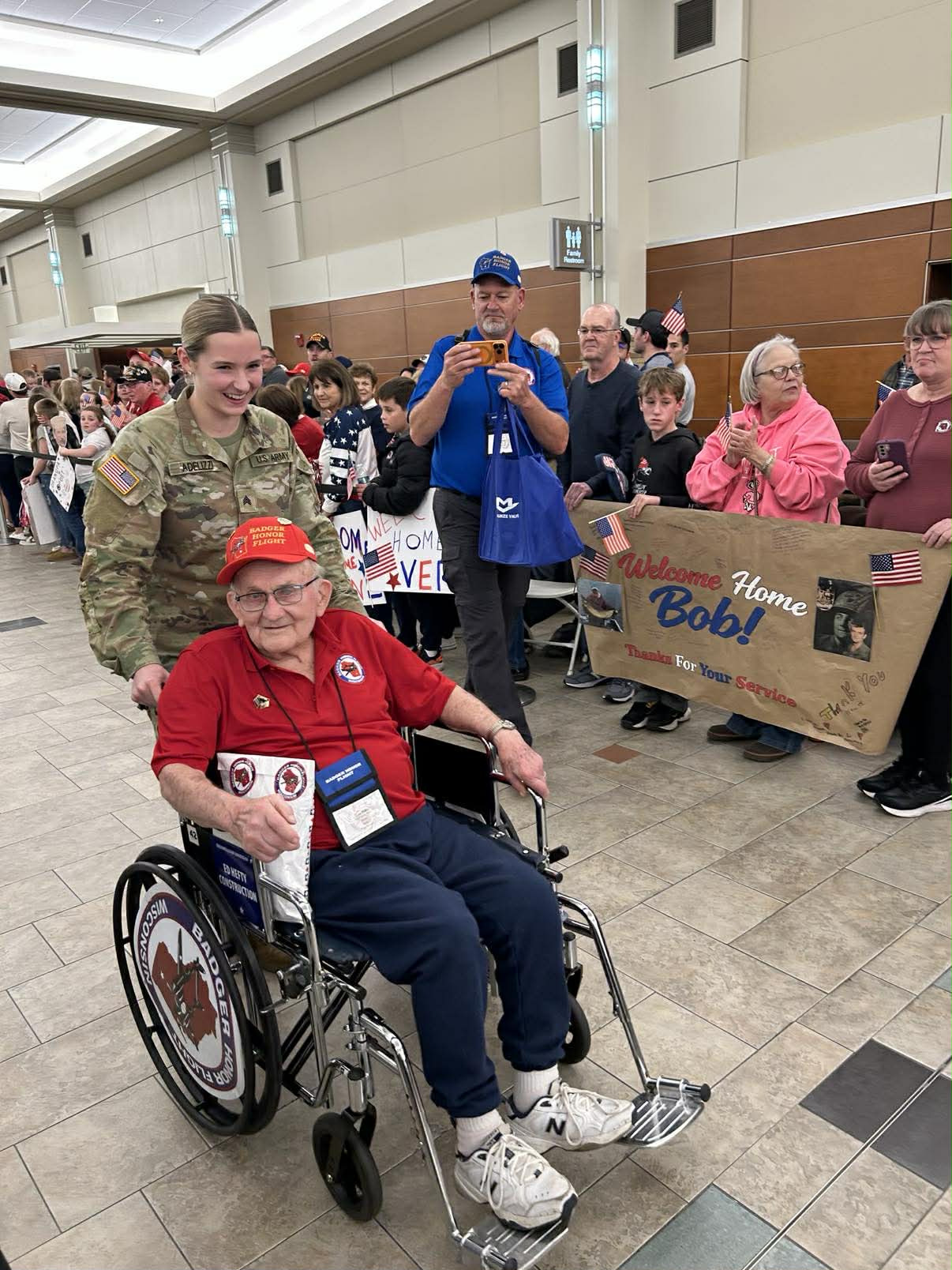
For many veterans of Al’s generation, who returned quietly to their homes and jobs in the 1950s, there had never been a public homecoming. History had simply marched on. But that night, the crowd was determined to give him the welcome home he had rightfully earned so long ago.
As Al was wheeled down the center of the roaring corridor, he reached out to shake every hand that extended toward him. He was entirely in the moment, absorbing the love of a community that recognized his sacrifice.
Suddenly, through the sea of unfamiliar faces, Al spotted his hospice family—Nicole, Amanda, and other Rainbow staff—waving signs in the crowd.
"He looked up and realized Amanda and I were there," Nicole said. "He was like, 'Oh! I know you! Why are you here?'"
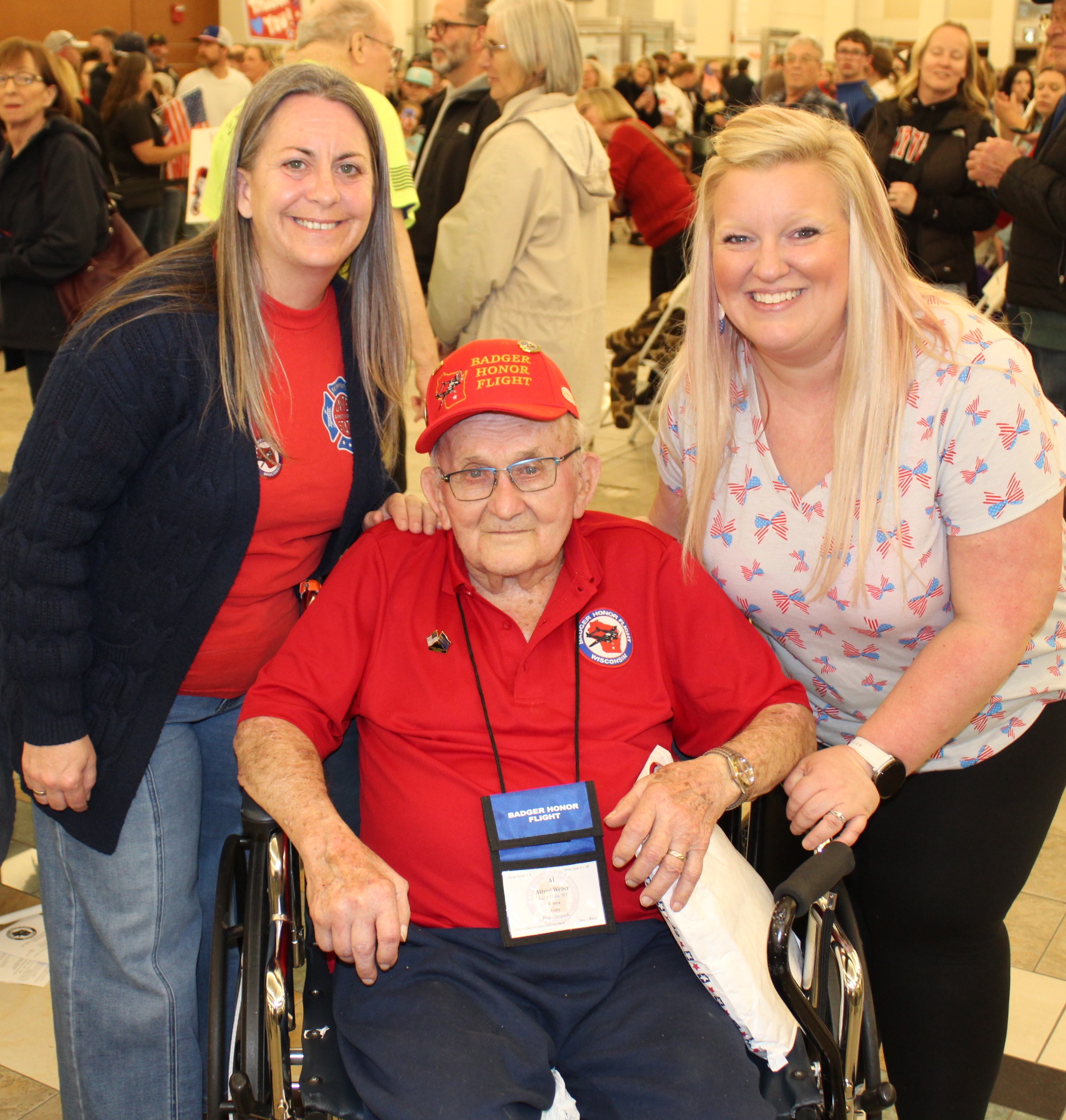
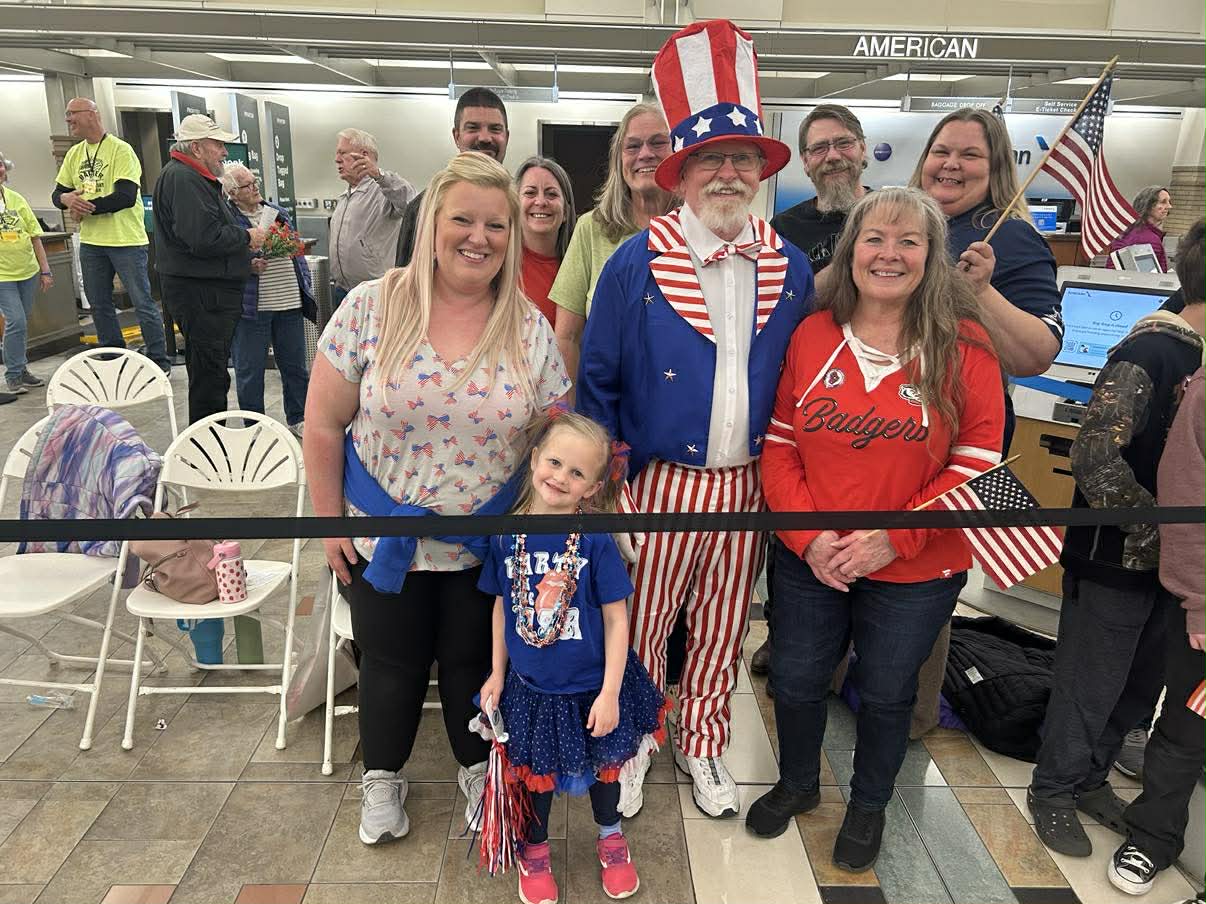
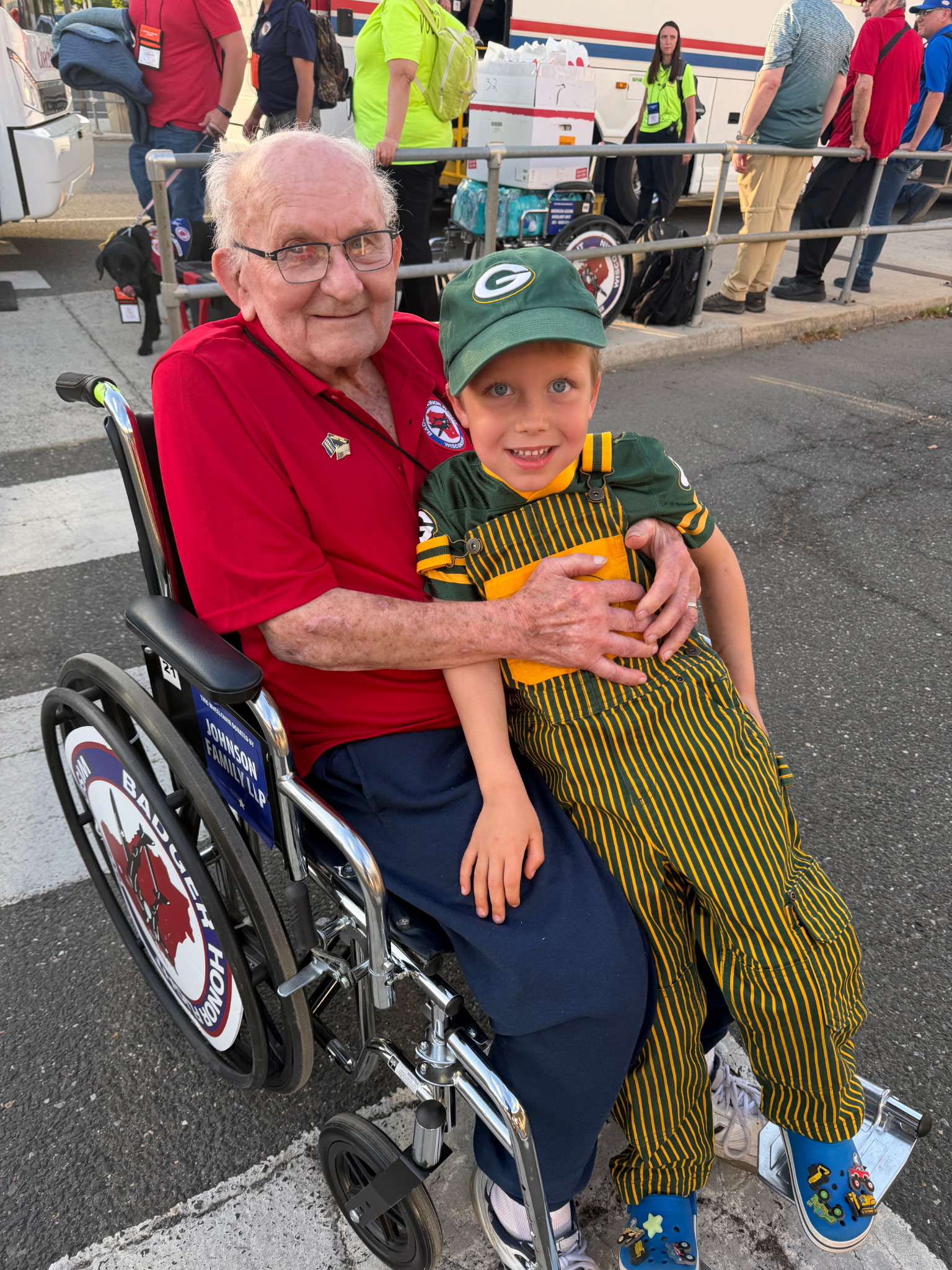
The warmth of the crowd also extended to its youngest members. Amidst the cheering, a little boy in a Green Bay Packers outfit wandered over, completely captivated by the elderly veteran, and sat right on Al's lap to join in the moment.
“The parents didn’t tell him to do that,” Brian said, still in disbelief. “Just absolutely amazing.”
But the most beautiful face waiting at the end of that long, loud line belonged to his wife of 70 years, Maxine. Despite her own health struggles, she braved the late hours and chaotic crowds alongside family to witness Al’s triumph.
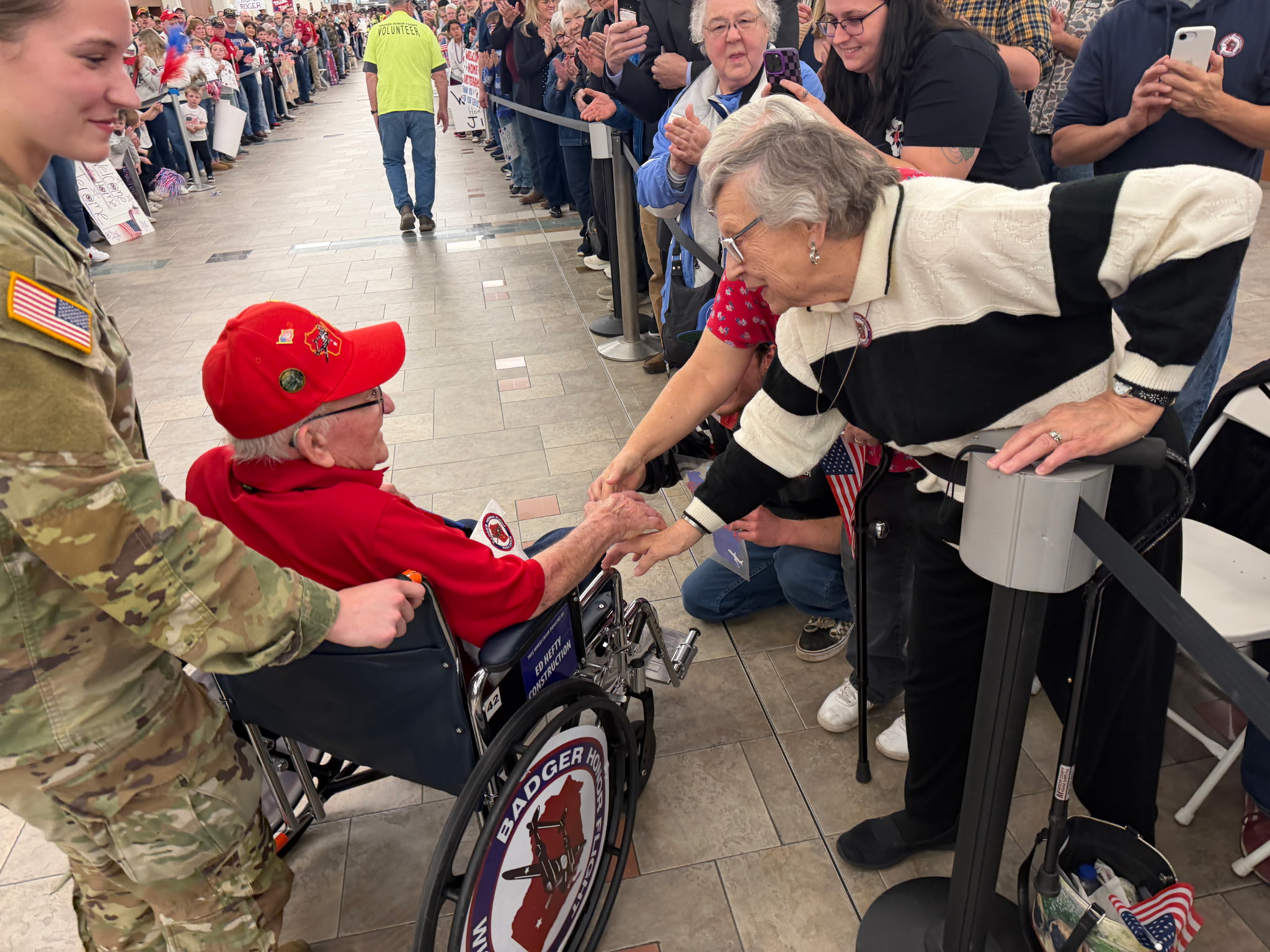
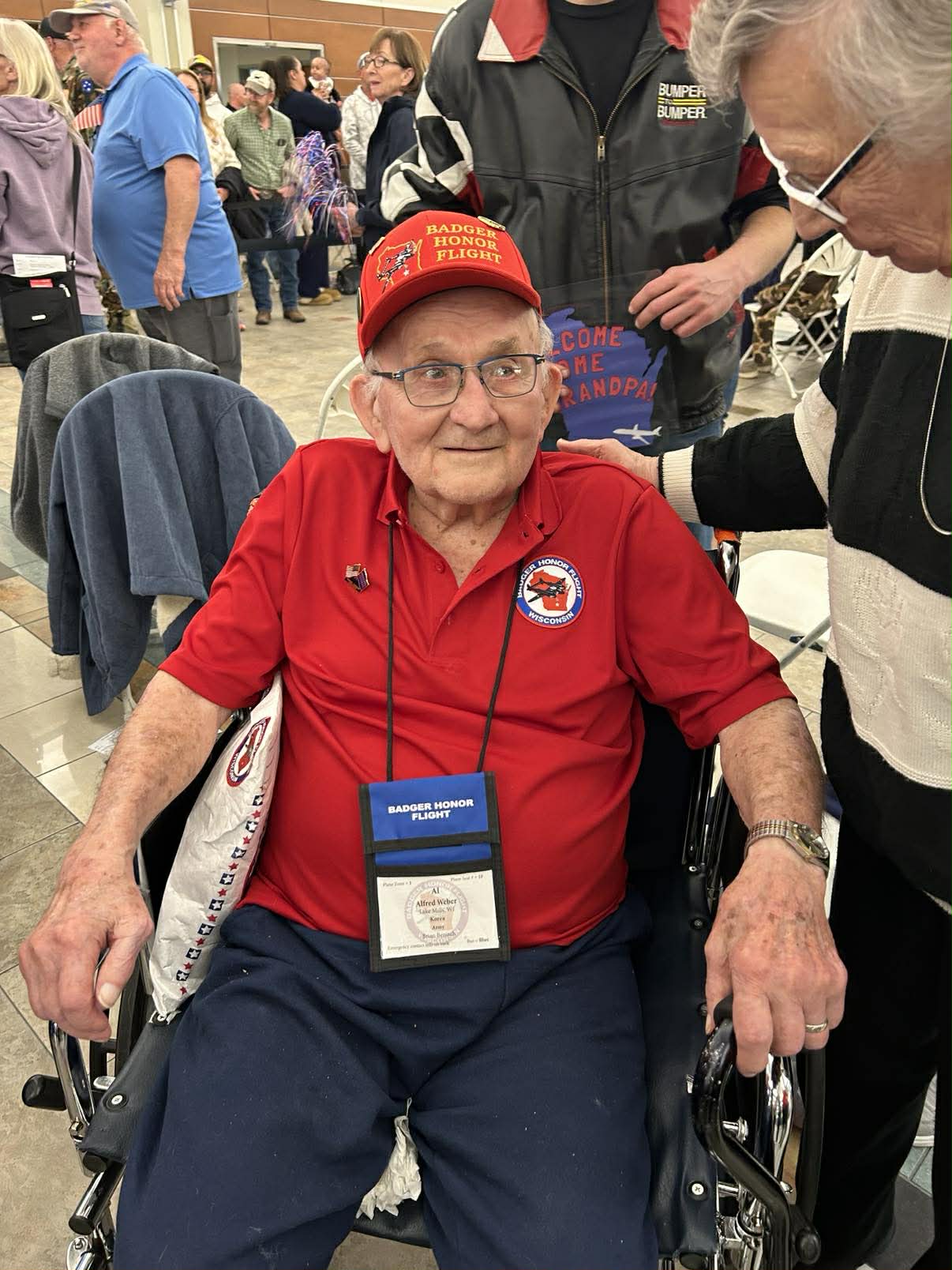
‘My wife for 70 years, Jesus God," Al laughed. "Holy crap, that's enough to serve twice, isn’t it? But I made it. It was a very long day, but worth all of it."
Today, welcome-home banners crafted by children from Heather’s Family Care in Fort Atkinson, proudly decorate his door. Al lights up the moment anyone asks about his experience, eager to share his story with staff, residents, and visitors.
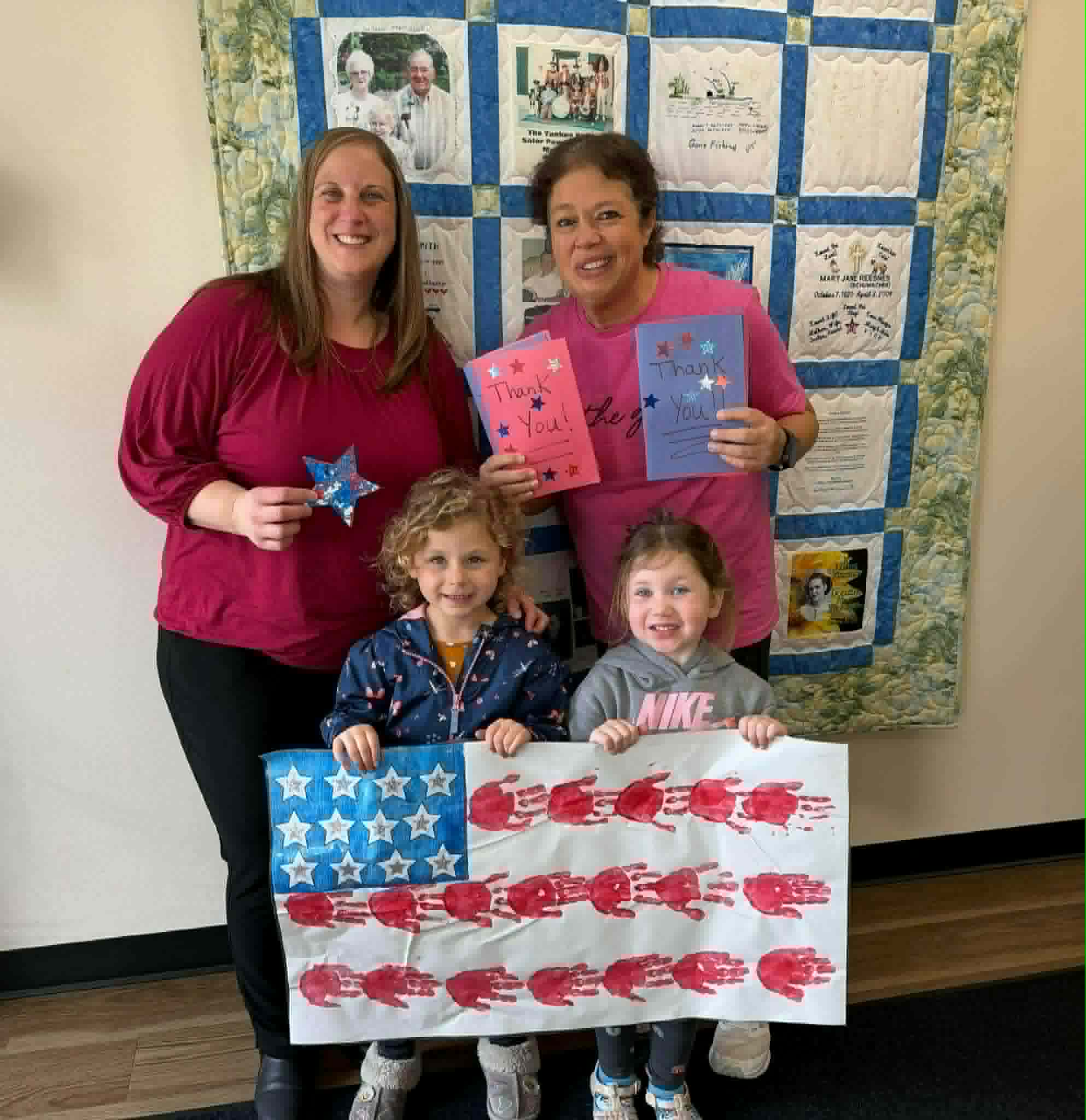
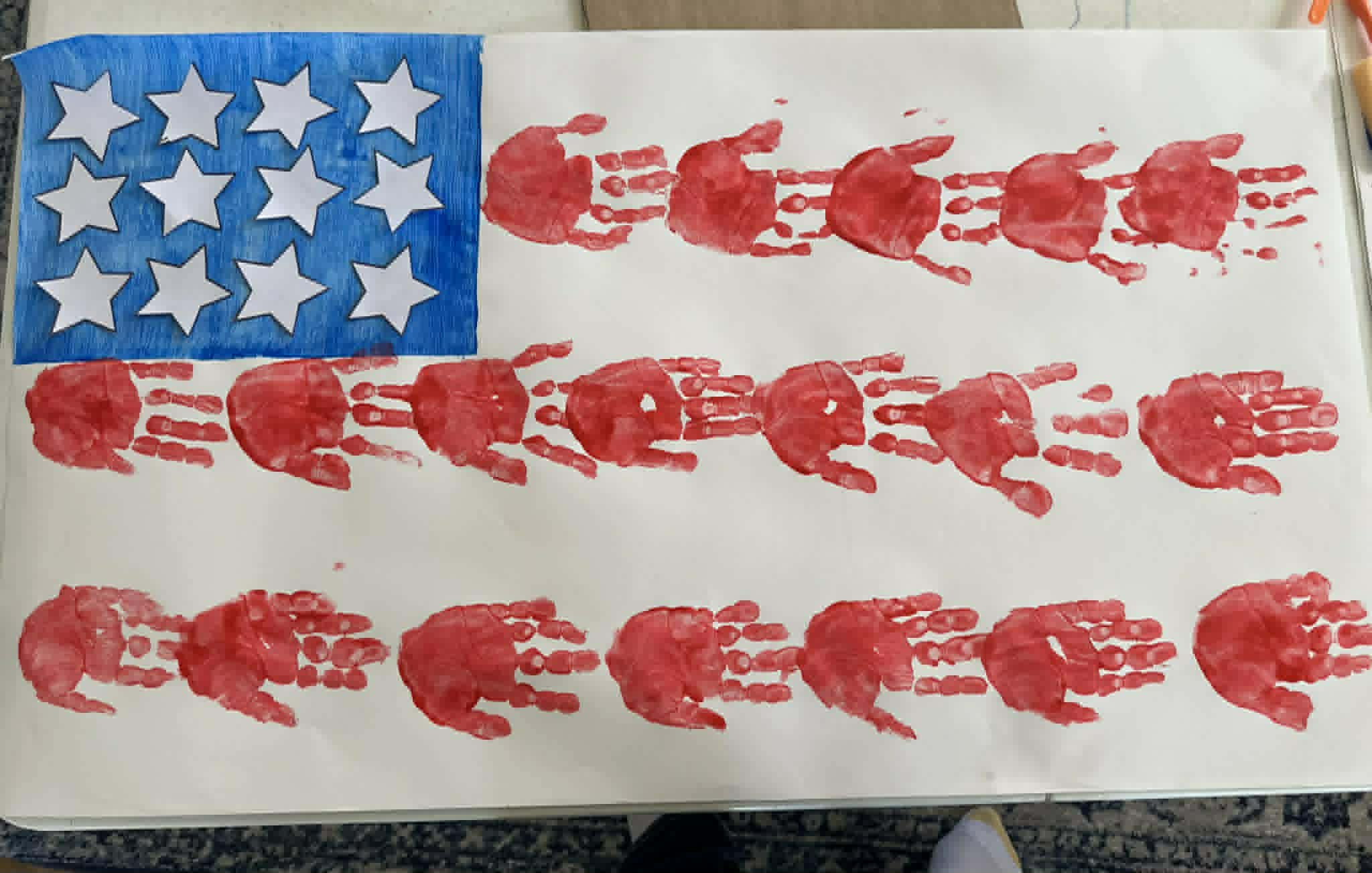
A few days later, Nicole surprised Al with another batch of artwork from her daughter, Willow, and her classmates at Lil' Hawks Academy. Each card serves as a powerful reminder that Al’s service is remembered and honored by the next generation.
“It was a day I will never forget,” Brian said. “I loved watching Al enjoy every minute of it.”
“I won’t ever forget either,” Al replied.
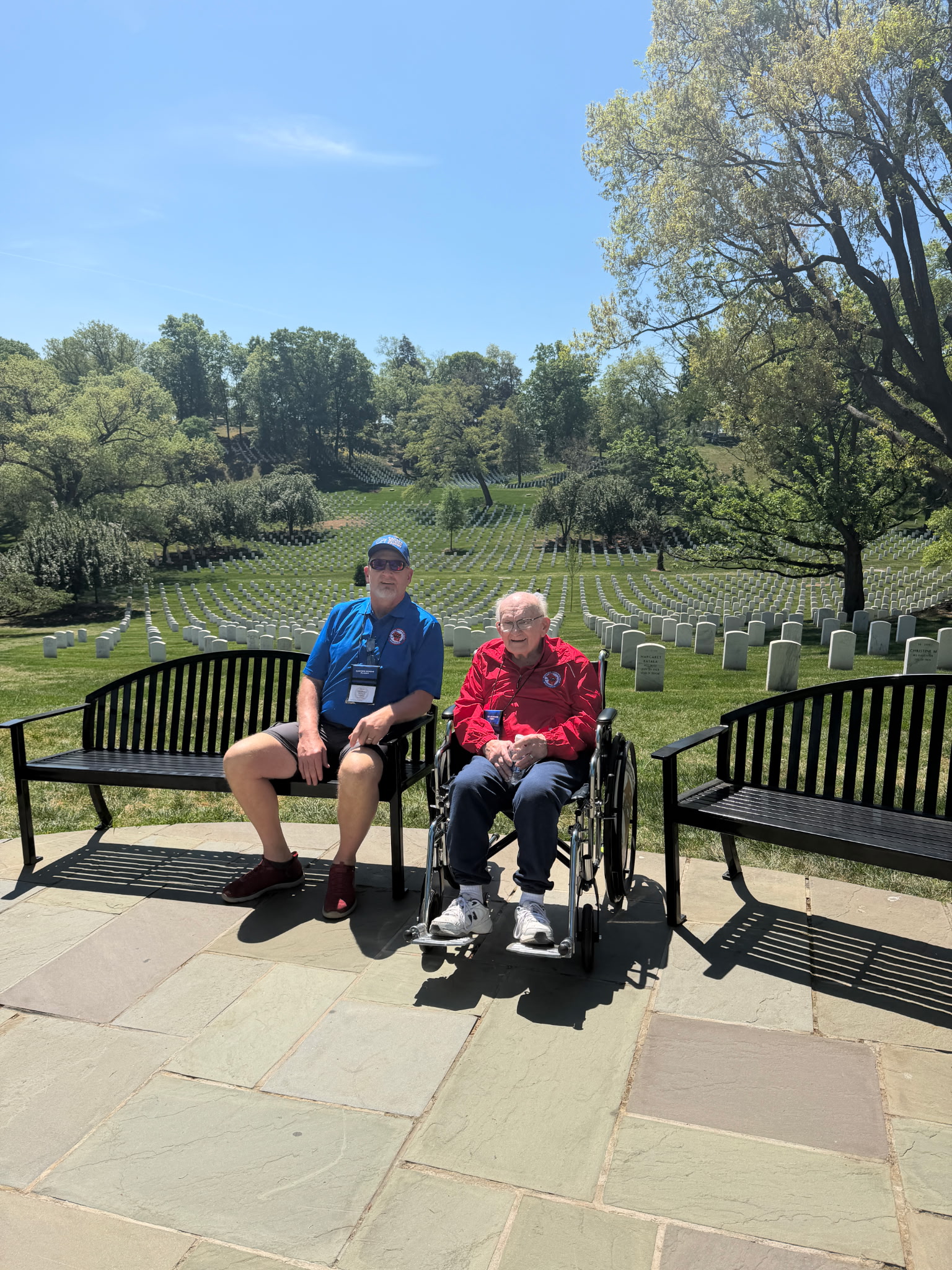
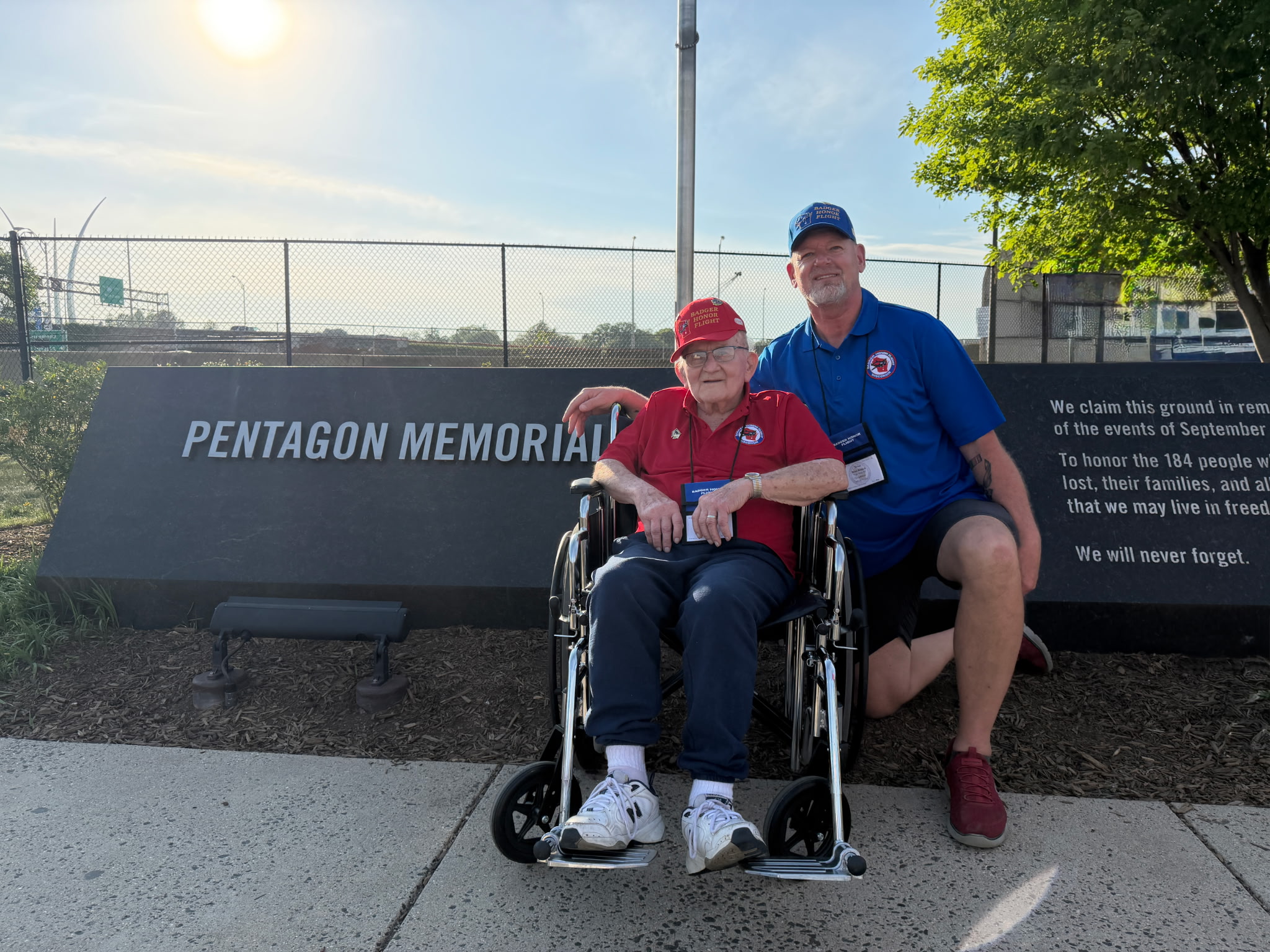
The beautiful bond between the two veterans didn’t end when the plane landed. Brian continues his faithful weekly visits, often bringing his dog along to sit by Al’s chair. Whether they’re cracking jokes or flipping through the photo album Brian and his wife, Terri, compiled from their trip, the two men share a rare, effortless friendship they both view as a crowning blessing in their lives.
"Something just clicked with him and I early on," Brian said. "It's a very special connection and I don't know if I'll ever have it again. I get just as much out of it as he does, and it makes my day."
When Rainbow’s care team looks at Al today, they see a man who is the definition of gallant, brave, and honorable. He went into hospice facing the end of his story, but through the dedication of those around him, he turned his final chapter into a reminder that life’s best moments can come at the very end.
For a man about to turn 98 in July, the full magnitude of his service has finally come into focus.
“The older I get, the more I see how involved I was,” Al said. “When I was just a kid, I didn’t realize the bigger picture. But seeing them say thank you now, as an adult—it means so much more.”
For any other veteran hesitant to make a "fuss" over a trip like this, the retired farmer has some simple, direct, and honest advice.
"You're a damn fool if you don't go," Al said with a wide grin. "It's a beautiful trip."